
Under dark skies
Thar Desert Night Sky & Stargazing
Quiet desert surroundings, vast dark skies, constellations, and the stillness of the Thar night.
Overview
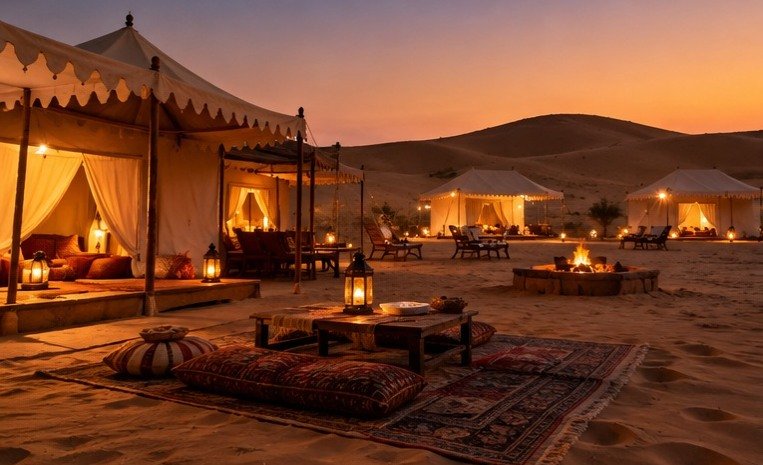
Away from the light pollution of major cities, the Thar Desert offers an extraordinary window into the night sky. In a quiet desert setting, relax under the celestial expanse as your host shares traditional desert folklore, navigational star lore, and constellations visible across the Rajasthani sky.
The FolkMiles approach
Why This Experience is Different
What to expect
What You Will Experience
- Settling into comfortable desert floor cushions or camp chairs under an open sky
- Letting your eyes adapt to the darkness to reveal thousands of visible stars
- Identifying major constellations such as Orion, Ursa Major, Cassiopeia, and seasonal planets
- Hearing how desert caravans historically navigated long trade journeys by the North Star
- Enjoying warm ginger tea or spiced milk under the silent desert midnight
Local context
Stories Behind the Sand
In the arid desert, before modern compasses and GPS, night travellers read the stars as their map. Local oral traditions associate particular stars with seasonal agricultural shifts and desert rainfall predictions.
Important Notes
- • Sky clarity and visibility depend entirely on real-time weather, haze, and the lunar cycle. Visibility of faint celestial objects varies by night.
- • Desert winter nights (December–January) can drop below 8°C (46°F); heavy woollens are recommended.
What to Bring
- • Warm thermal jacket, beanie cap, and gloves during winter months
- • A red-light flashlight or phone filter to preserve night-adjusted vision
- • Binoculars if you have them (great for observing star clusters and the lunar surface)
Flexible planning
How We Can Customize This
We adapt timings, group sizes, and complementary stops around your travel itinerary:
- Plan your trip dates around the new moon for the darkest skies
- Arrange an intimate private setup away from the main camp courtyard
Frequently asked questions
Common Questions
Can we see the Milky Way every night?
No. Stargazing is subject to atmospheric conditions, dust, clouds, and the moon phase. During a bright full moon, the desert is beautifully illuminated but fewer stars are visible. The darkest, clearest nights occur around the new moon.
Do you provide telescopes?
Our standard experience is naked-eye and binocular stargazing focusing on wide-field constellations and desert lore. Specialist telescope sessions can be arranged on advance request depending on availability.
Can non-camp guests join for stargazing?
Yes. We can organize a private evening desert drive from your city hotel for stargazing and return you to town afterwards.
Your next story starts here
Let’s make it
your kind of journey.
Tell us a little about your Jaisalmer plans.
We’ll take it from there, together.